From 4x4 to Infinity: How 2048 Games Evolved Into New Puzzle Formats

Slide, Merge, Math, and Puzzle Solving
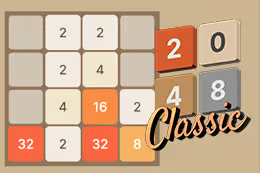
2048 relies on a unique gameplay because unlike puzzle games that rely on fast reflexes or complex mechanics, 2048 puzzles rely on pure mathematical progression where numbers double with every merge. This makes it easily intuitive to learn, but incredibly hard to master. In 2048, players must slide numbered tiles on a 4x4 grid to combine/merge them to reach the elusive 2048 tile to win the game. This provides a perfect and strategic informative gameplay to the player that transforms a casual grid-sliding mechanic into a high-stakes tactical exercise where a single misplaced tile can completely disable the board and end the game.
The game is so immersive because once you start playing it, it induces a state of cognitive flow with a tight, immediate feedback loop. Swiping a tile provides immediate visual and numerical satisfaction as matching the tiles smoothly merge and triggers a subtle sense of accomplishment with every double value achieved. This constant and progressive reward system paired with a clear, long-term milestone reaching the 2048 tile, is what keeps the Dopamine triggering and players anchored and motivated.
Also, 2048 is deeply fun as it strikes a perfect balance between predictability and sudden risk where the random spawning of new "2" or "4" tiles introduces just enough uncertainty to keep the players continually puzzle-solving. What’s more, as the grid fills up, the game evolves from a relaxing math exercise into a high-stakes spatial problem where space becomes the premium currency. Nevertheless, being able to cope up with the tension of managing a crowded board, and eventually executing a huge chain reaction that clears the grid, delivers the gratifying and powerful rush that makes the gameplay truly and deeply satisfying.
Little Girl, Big Red Ball, and 4x4 to Eternity
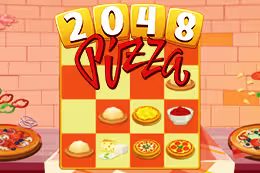
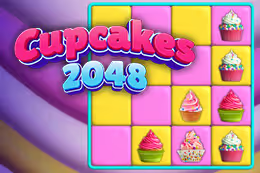
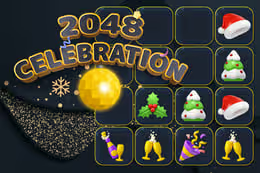
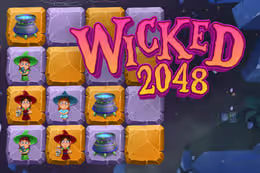
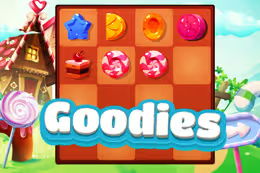
The evolution of 2048 into new puzzle formats started almost immediately after its initial open-source release by Gabriele Cirulli in 2014. At first, its evolution was focused on superficial yet highly popular theme re-skins, substituting the classic numeric progression for images, pop culture icons, as well as current-day popular media. As more developers embraced and built on the original game’s framework, the game grid itself became the focus for structural experimentation. To expand and vary the game, the traditional 4x4 matrix was made larger to hold layouts with 5x5, 6x6, or 8x8 grids. These also altered the game’s spatial reasoning by introducing hexagonal boards, and forcing players to map their matching strategies across entirely new geometric directions, creating versions further and further from the original.
This didn’t stop there, developers began blending the standard tile-sliding mechanics of 2048 with other external video game genres to create hybrid sub-genres. Good examples of these were the gravity-based merge puzzles, where instead of sliding tiles across a flat grid, numbered objects where either dropped or launched from the top of the screen. These ideas eventually brought forth 2048 games that combined the puzzle calculations with physical, arcade-style aiming, such as slingshot physics or bubble-shooter gameplay where spherical objects merge upon hitting each other. Other variants integrated the classic game grid with Tetris-style block action, proving that the core satisfaction of combining identical values could adapt smoothly to active physics and real-time movement.
The name of the games may change, but the legacy of the 2048 puzzle gaming system has continually evolved into other highly strategic puzzle-solving games that continue to appeal to traditional puzzle-solvers as well as other genre aficionados of rogue-like and deck-building games. Surprisingly, some variants even introduce role-playing elements like spending gained “Mana” to cast active spells, unlocking board modifiers, or deploying power-ups like bombs and teleportation to manipulate and counteract the narrowing grid space. There are even player-vs.-player puzzle games that have adapted the numerical merging principles of 2048 games where players race to acquire high-value tiles or deliberately sabotage their opponent's grid in real time. Regardless, by evolving from a simple casual puzzle game into a foundational blueprint for multi-game genre innovation, 2048 has redefined how modern digital puzzle mechanics are designed and created.
Now, if the little Princess could somehow get the big red ball into an infinite game grid.